

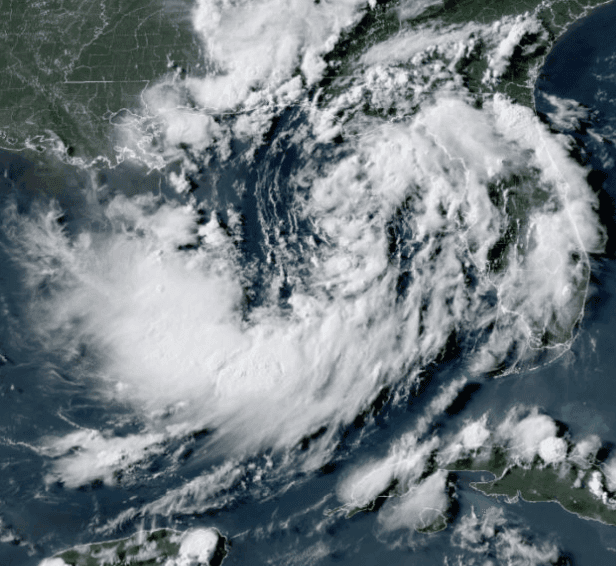
Strong El Niño conditions in the equatorial Pacific have driven record wind shear and atmospheric stability across the Atlantic basin, suppressing tropical cyclone development through the climatological peak. As of early September 2026, the season has produced only five named storms—all tropical storms with no hurricanes formed—marking one of the quietest starts in the satellite era and an Accumulated Cyclone Energy total 92% below average. Official NOAA and Colorado State University outlooks project just 2–6 hurricanes for the full June–November period, with minimal U.S. landfall risk. Remaining activity before November 30 could still shift outcomes if shear relaxes or late-season Gulf or subtropical systems intensify, though current model consensus and historical analogs under strong El Niño favor continued low hurricane counts.
Polymarketデータを参照したAI生成の実験的な要約。これは取引アドバイスではなく、このマーケットの解決方法には一切関係ありません。 · 更新日2026年に2つ以上のハリケーンが米国に上陸しますか?
2026年に2つ以上のハリケーンが米国に上陸しますか?
はい
はい
A hurricane is a tropical cyclone with maximum sustained winds of 74 mph or greater (Category 1 or higher on the Saffir-Simpson Hurricane Wind Scale), as described at https://www.nhc.noaa.gov/aboutsshws.php, and a hurricane landfall is said to occur when the hurricane's surface center intersects with the coastline, as described at https://www.nhc.noaa.gov/aboutgloss.shtml#LANDFALL. A storm must hold hurricane strength (Category 1 or higher on the Saffir-Simpson scale) at the moment its surface center intersects the coastline for that landfall to qualify.
If a single storm makes landfall more than once within this area during this period, each landfall identified as a distinct landfall by the NHC is counted separately toward the total. A storm that briefly moves over open water and returns to make an additional landfall counts as a separate landfall only if the NHC's own reporting identifies it as such; a single continuous track that does not leave and re-strike land counts once.
This market may resolve based on the initial NHC advisory reporting a qualifying landfall regardless of any later advisory, retraction, best-track revision, or reanalysis that revises that storm's intensity downward at the time of landfall. However, if a subsequent advisory or correction identifies a qualifying landfall that was not reflected in initial reporting, that landfall will be added to the count.
マーケット開始日: Jul 24, 2026, 12:04 PM ET
リゾルバー
0x65070BE91...A hurricane is a tropical cyclone with maximum sustained winds of 74 mph or greater (Category 1 or higher on the Saffir-Simpson Hurricane Wind Scale), as described at https://www.nhc.noaa.gov/aboutsshws.php, and a hurricane landfall is said to occur when the hurricane's surface center intersects with the coastline, as described at https://www.nhc.noaa.gov/aboutgloss.shtml#LANDFALL. A storm must hold hurricane strength (Category 1 or higher on the Saffir-Simpson scale) at the moment its surface center intersects the coastline for that landfall to qualify.
If a single storm makes landfall more than once within this area during this period, each landfall identified as a distinct landfall by the NHC is counted separately toward the total. A storm that briefly moves over open water and returns to make an additional landfall counts as a separate landfall only if the NHC's own reporting identifies it as such; a single continuous track that does not leave and re-strike land counts once.
This market may resolve based on the initial NHC advisory reporting a qualifying landfall regardless of any later advisory, retraction, best-track revision, or reanalysis that revises that storm's intensity downward at the time of landfall. However, if a subsequent advisory or correction identifies a qualifying landfall that was not reflected in initial reporting, that landfall will be added to the count.
リゾルバー
0x65070BE91...Strong El Niño conditions in the equatorial Pacific have driven record wind shear and atmospheric stability across the Atlantic basin, suppressing tropical cyclone development through the climatological peak. As of early September 2026, the season has produced only five named storms—all tropical storms with no hurricanes formed—marking one of the quietest starts in the satellite era and an Accumulated Cyclone Energy total 92% below average. Official NOAA and Colorado State University outlooks project just 2–6 hurricanes for the full June–November period, with minimal U.S. landfall risk. Remaining activity before November 30 could still shift outcomes if shear relaxes or late-season Gulf or subtropical systems intensify, though current model consensus and historical analogs under strong El Niño favor continued low hurricane counts.
Polymarketデータを参照したAI生成の実験的な要約。これは取引アドバイスではなく、このマーケットの解決方法には一切関係ありません。 · 更新日

外部リンクに注意してください。
外部リンクに注意してください。
よくある質問