
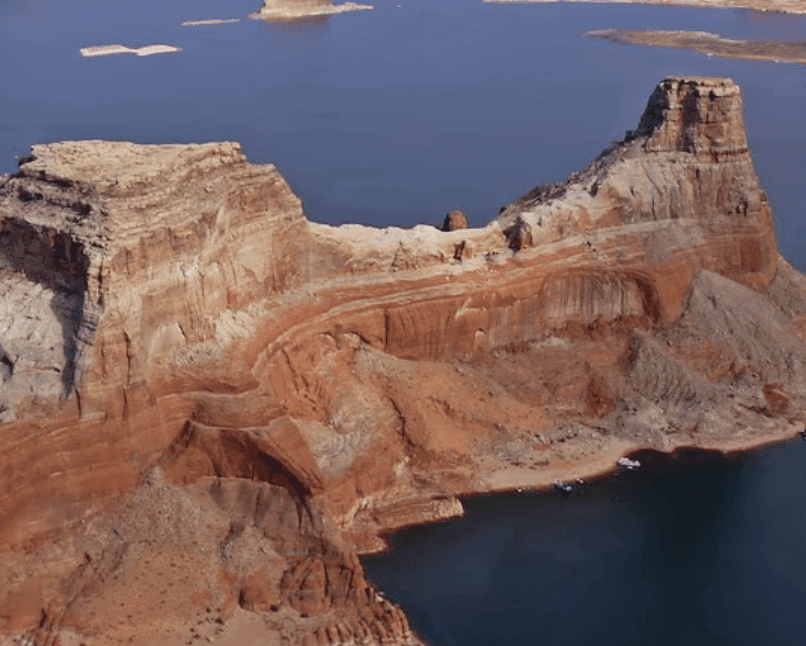
Current Lake Powell elevation stands near 3,517 ft amid ongoing drought conditions and exceptionally low 2026 inflows, including July unregulated inflow at just 9% of average. Bureau of Reclamation 24-month studies project most-probable end-of-year levels around 3,507–3,516 ft, with management under new 2027–2028 guidelines prioritizing conservation releases of 6.0–7.0 million acre-feet annually to protect the 3,510-ft threshold for Glen Canyon Dam operations. Conservative outflows, potential upstream transfers, and emphasis on this elevation band as a key operational safeguard explain the dominant market-implied probabilities for stabilization above 3,510 ft or within the 3,500–3,510 ft range, while the low odds below 3,490 ft reflect limited downside risk under current adaptive protocols despite persistent arid hydrology.
Resumo experimental gerado por IA com dados do Polymarket. Isto não é aconselhamento de trading e não tem qualquer papel na resolução deste mercado. · AtualizadoQuão baixo o Lago Powell cairá?
Quão baixo o Lago Powell cairá?
Acima de 3.510 pés 54%
3.500–3.510 pés 39%
Abaixo de 3.490 pés 5.7%
3.490–3.500 pés 3.9%
$13,372 Vol.
$13,372 Vol.
Acima de 3.510 pés
54%
3.500–3.510 pés
39%
3.490–3.500 pés
4%
Abaixo de 3.490 pés
6%
Acima de 3.510 pés 54%
3.500–3.510 pés 39%
Abaixo de 3.490 pés 5.7%
3.490–3.500 pés 3.9%
$13,372 Vol.
$13,372 Vol.
Acima de 3.510 pés
54%
3.500–3.510 pés
39%
3.490–3.500 pés
4%
Abaixo de 3.490 pés
6%
Resolution is determined by the lowest daily elevation recorded at Lake Powell (Glen Canyon Dam, USBR site) between market creation and March 31, 2027. Because a lower reading can occur at any point up to March 31, 2027, all outcomes are settled after the window closes, based on the lowest daily elevation recorded during the window.
The resolution source is the minimum daily lake elevation published by the U.S. Bureau of Reclamation for Lake Powell at Glen Canyon Dam, available at https://data.usbr.gov/catalog/2362/item/508. USBR data is provisional and subject to revision; the lowest daily elevation reflected in USBR data as of April 15, 2027 governs, and revisions published after April 15, 2027 will not change the outcome. Daily elevation data published at https://lakepowell.water-data.com/ may also be referenced, but if it disagrees with USBR, the USBR value governs.
Mercado Aberto: Aug 17, 2026, 5:49 PM ET
Fonte de resolução
https://data.usbr.gov/catalog/2362/item/508Resolver
0x69c47De9D...Resolution is determined by the lowest daily elevation recorded at Lake Powell (Glen Canyon Dam, USBR site) between market creation and March 31, 2027. Because a lower reading can occur at any point up to March 31, 2027, all outcomes are settled after the window closes, based on the lowest daily elevation recorded during the window.
The resolution source is the minimum daily lake elevation published by the U.S. Bureau of Reclamation for Lake Powell at Glen Canyon Dam, available at https://data.usbr.gov/catalog/2362/item/508. USBR data is provisional and subject to revision; the lowest daily elevation reflected in USBR data as of April 15, 2027 governs, and revisions published after April 15, 2027 will not change the outcome. Daily elevation data published at https://lakepowell.water-data.com/ may also be referenced, but if it disagrees with USBR, the USBR value governs.
Fonte de resolução
https://data.usbr.gov/catalog/2362/item/508Resolver
0x69c47De9D...Current Lake Powell elevation stands near 3,517 ft amid ongoing drought conditions and exceptionally low 2026 inflows, including July unregulated inflow at just 9% of average. Bureau of Reclamation 24-month studies project most-probable end-of-year levels around 3,507–3,516 ft, with management under new 2027–2028 guidelines prioritizing conservation releases of 6.0–7.0 million acre-feet annually to protect the 3,510-ft threshold for Glen Canyon Dam operations. Conservative outflows, potential upstream transfers, and emphasis on this elevation band as a key operational safeguard explain the dominant market-implied probabilities for stabilization above 3,510 ft or within the 3,500–3,510 ft range, while the low odds below 3,490 ft reflect limited downside risk under current adaptive protocols despite persistent arid hydrology.
Resumo experimental gerado por IA com dados do Polymarket. Isto não é aconselhamento de trading e não tem qualquer papel na resolução deste mercado. · Atualizado

Cuidado com os links externos.
Cuidado com os links externos.
Frequently Asked Questions