

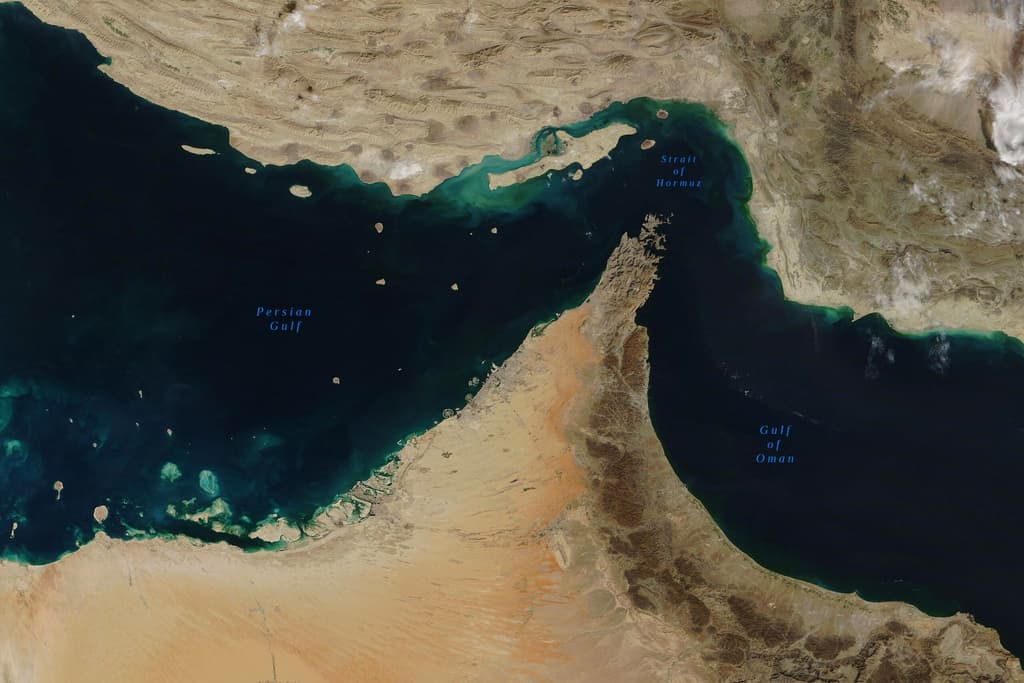
US officials have consistently framed the Strait of Hormuz as an international waterway where mandatory transit fees violate freedom of navigation under maritime law, even as President Trump briefly floated a 20% US cargo charge in July 2026 to offset security costs before reversing course in favor of Gulf investment commitments. The June 2026 US-Iran memorandum established a 60-day toll-free window after a period of blockade and conflict, but subsequent breakdowns, Iranian-Omani talks on service fees, and renewed US naval measures have kept the issue active. Trader focus centers on whether Washington will shift from enforcement of open passage to any form of US-administered charge amid fluctuating ceasefire talks and energy market pressures.
สรุปจาก AI ทดลองที่อ้างอิงข้อมูลจาก Polymarket ไม่ใช่คำแนะนำในการเทรดและไม่มีผลต่อการตัดสินตลาดนี้ · อัปเดตแล้ว$983,541 ปริมาณ
December 31
6%
$983,541 ปริมาณ
December 31
6%
Any payment amount or rate will count. Payments may be monetary or in-kind (e.g., a share of cargo or oil) and may be collected directly by the US government or by an agent, contractor, or intermediary collecting on its behalf, provided the payment is made under a US-imposed fee or a compensation arrangement.
The announcement, signing, or establishment of a fee program, executive order, regulation, or collection mechanism will not by itself qualify; at least one payment must actually be received by the listed date, 11:59 PM ET.
Payments collected by Iran or any other party acting on its own behalf will not count. Payments under preexisting obligations, including US customs duties, tariffs on goods imported into the United States, or standard port charges, will not count unless newly imposed as a condition of Strait of Hormuz transit or protection.
The resolution sources will be official announcements from the government of the United States and a consensus of credible reporting.
ตลาดเปิดเมื่อ: Jul 13, 2026, 12:00 PM ET
ผู้ตัดสินผล
0x65070BE91...Any payment amount or rate will count. Payments may be monetary or in-kind (e.g., a share of cargo or oil) and may be collected directly by the US government or by an agent, contractor, or intermediary collecting on its behalf, provided the payment is made under a US-imposed fee or a compensation arrangement.
The announcement, signing, or establishment of a fee program, executive order, regulation, or collection mechanism will not by itself qualify; at least one payment must actually be received by the listed date, 11:59 PM ET.
Payments collected by Iran or any other party acting on its own behalf will not count. Payments under preexisting obligations, including US customs duties, tariffs on goods imported into the United States, or standard port charges, will not count unless newly imposed as a condition of Strait of Hormuz transit or protection.
The resolution sources will be official announcements from the government of the United States and a consensus of credible reporting.
ผู้ตัดสินผล
0x65070BE91...US officials have consistently framed the Strait of Hormuz as an international waterway where mandatory transit fees violate freedom of navigation under maritime law, even as President Trump briefly floated a 20% US cargo charge in July 2026 to offset security costs before reversing course in favor of Gulf investment commitments. The June 2026 US-Iran memorandum established a 60-day toll-free window after a period of blockade and conflict, but subsequent breakdowns, Iranian-Omani talks on service fees, and renewed US naval measures have kept the issue active. Trader focus centers on whether Washington will shift from enforcement of open passage to any form of US-administered charge amid fluctuating ceasefire talks and energy market pressures.
สรุปจาก AI ทดลองที่อ้างอิงข้อมูลจาก Polymarket ไม่ใช่คำแนะนำในการเทรดและไม่มีผลต่อการตัดสินตลาดนี้ · อัปเดตแล้ว
ระวังลิงก์ภายนอก
ระวังลิงก์ภายนอก
คำถามที่พบบ่อย