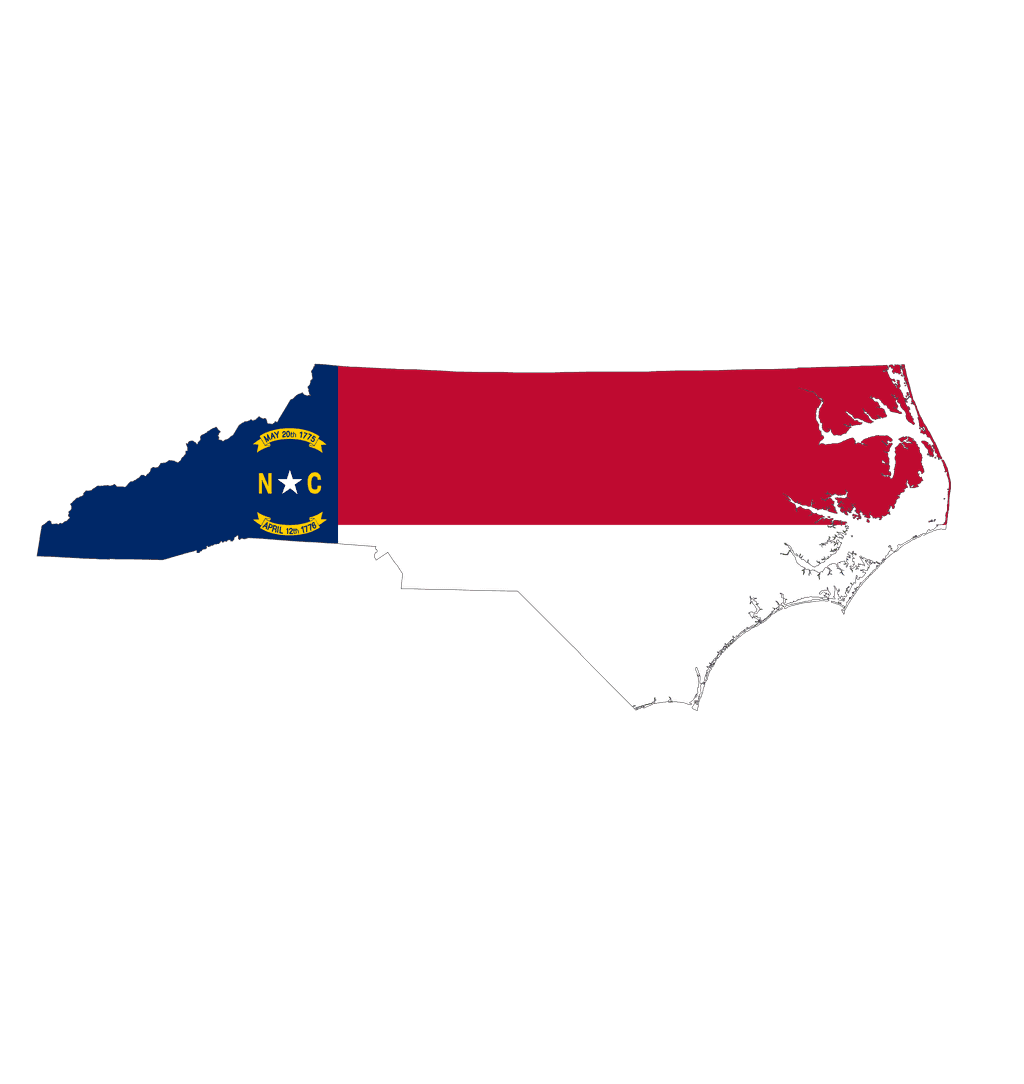
To trade in the US, go to polymarket.us

icon for How many House seats will the Democrats win in North Carolina?

How many House seats will the Democrats win in North Carolina?

icon for How many House seats will the Democrats win in North Carolina?

How many House seats will the Democrats win in North Carolina?

5 40%

6+ 23.2%

4 22%

3 14%

Polymarket

$12,862 Vol.

5 40%

6+ 23.2%

4 22%

3 14%

Polymarket

$12,862 Vol.

<3

$899 Vol.

1%

3

$2,075 Vol.

14%

4

$2,586 Vol.

22%

5

$5,269 Vol.

40%

6+

$2,033 Vol.

23%

This market will resolve according to the number of seats in the US House of Representatives won by the Democratic Party in North Carolina in the 2026 United States midterm election. All North Carolina US House of Representatives elections held as part of the 2026 United States midterm election that elect voting members and determine representation in the upcoming 120th congress are included. Special elections to fill a vacancy for the remainder of an unexpired term are not included, whether or not held concurrently with the 2026 United States midterm election. Runoffs for qualifying elections will determine attribution of the relevant seat. Seats are attributed to the party under which the member was elected. If a member-elect changes party affiliation or vacates their seat after the date of the 2026 United States midterm election, the seat is attributed to the party under which the member was elected. Members of the House elected as independents who formally caucus, or who announce their intent to caucus, with a party prior to the date of the 2026 United States midterm election are included in that party’s count. If the caucus decisions of relevant members of the US House of Representatives elected as independents cannot be determined as of the date of the 2026 United States midterm election, this market may remain open until the earlier of (i) an announcement from the relevant members of their intents to caucus, or (ii) January 4th, 11:59 PM ET of the following calendar year. If no such announcement is made by January 4th, 11:59 PM ET of the following calendar year, the member will not count towards the seat count of any party. The resolution sources for this market will be official information from relevant state electoral authorities, the United States Congress, and a consensus of credible reporting.**Recent mid-decade redistricting and the national political environment shape trader views on Democratic U.S. House gains in North Carolina’s 14 districts.** A new congressional map enacted in October 2025 shifted Republican-leaning counties into District 1, making incumbent Democrat Don Davis’s seat more difficult while slightly improving prospects in District 3. This builds on the post-2024 10-4 Republican advantage. Forecasters such as Sabato’s Crystal Ball rate both NC-1 and the open or weakened NC-11 as toss-ups, reflecting Democratic polling momentum on the generic congressional ballot (typically D+6 to D+8) and candidate fundraising. Democrats enter with four incumbents and no major retirements among them, while Republican weaknesses in NC-11 and turnout patterns in competitive eastern and western districts create paths for modest net gains. Legal challenges to the map add boundary uncertainty ahead of November 3. These factors—redistricting effects offset by midterm headwinds for the party in power—support trader consensus around four to six Democratic seats as the most probable range.

This market will resolve according to the number of seats in the US House of Representatives won by the Democratic Party in North Carolina in the 2026 United States midterm election.

All North Carolina US House of Representatives elections held as part of the 2026 United States midterm election that elect voting members and determine representation in the upcoming 120th congress are included. Special elections to fill a vacancy for the remainder of an unexpired term are not included, whether or not held concurrently with the 2026 United States midterm election. Runoffs for qualifying elections will determine attribution of the relevant seat.

Seats are attributed to the party under which the member was elected. If a member-elect changes party affiliation or vacates their seat after the date of the 2026 United States midterm election, the seat is attributed to the party under which the member was elected.

Members of the House elected as independents who formally caucus, or who announce their intent to caucus, with a party prior to the date of the 2026 United States midterm election are included in that party’s count. If the caucus decisions of relevant members of the US House of Representatives elected as independents cannot be determined as of the date of the 2026 United States midterm election, this market may remain open until the earlier of (i) an announcement from the relevant members of their intents to caucus, or (ii) January 4th, 11:59 PM ET of the following calendar year. If no such announcement is made by January 4th, 11:59 PM ET of the following calendar year, the member will not count towards the seat count of any party.

The resolution sources for this market will be official information from relevant state electoral authorities, the United States Congress, and a consensus of credible reporting.
This market will resolve according to the number of seats in the US House of Representatives won by the Democratic Party in North Carolina in the 2026 United States midterm election. All North Carolina US House of Representatives elections held as part of the 2026 United States midterm election that elect voting members and determine representation in the upcoming 120th congress are included. Special elections to fill a vacancy for the remainder of an unexpired term are not included, whether or not held concurrently with the 2026 United States midterm election. Runoffs for qualifying elections will determine attribution of the relevant seat. Seats are attributed to the party under which the member was elected. If a member-elect changes party affiliation or vacates their seat after the date of the 2026 United States midterm election, the seat is attributed to the party under which the member was elected. Members of the House elected as independents who formally caucus, or who announce their intent to caucus, with a party prior to the date of the 2026 United States midterm election are included in that party’s count. If the caucus decisions of relevant members of the US House of Representatives elected as independents cannot be determined as of the date of the 2026 United States midterm election, this market may remain open until the earlier of (i) an announcement from the relevant members of their intents to caucus, or (ii) January 4th, 11:59 PM ET of the following calendar year. If no such announcement is made by January 4th, 11:59 PM ET of the following calendar year, the member will not count towards the seat count of any party. The resolution sources for this market will be official information from relevant state electoral authorities, the United States Congress, and a consensus of credible reporting.
Volume
$12,862
End Date
Nov 3, 2026
Market Opened
Aug 11, 2026, 10:10 AM ET
This market will resolve according to the number of seats in the US House of Representatives won by the Democratic Party in North Carolina in the 2026 United States midterm election. All North Carolina US House of Representatives elections held as part of the 2026 United States midterm election that elect voting members and determine representation in the upcoming 120th congress are included. Special elections to fill a vacancy for the remainder of an unexpired term are not included, whether or not held concurrently with the 2026 United States midterm election. Runoffs for qualifying elections will determine attribution of the relevant seat. Seats are attributed to the party under which the member was elected. If a member-elect changes party affiliation or vacates their seat after the date of the 2026 United States midterm election, the seat is attributed to the party under which the member was elected. Members of the House elected as independents who formally caucus, or who announce their intent to caucus, with a party prior to the date of the 2026 United States midterm election are included in that party’s count. If the caucus decisions of relevant members of the US House of Representatives elected as independents cannot be determined as of the date of the 2026 United States midterm election, this market may remain open until the earlier of (i) an announcement from the relevant members of their intents to caucus, or (ii) January 4th, 11:59 PM ET of the following calendar year. If no such announcement is made by January 4th, 11:59 PM ET of the following calendar year, the member will not count towards the seat count of any party. The resolution sources for this market will be official information from relevant state electoral authorities, the United States Congress, and a consensus of credible reporting.**Recent mid-decade redistricting and the national political environment shape trader views on Democratic U.S. House gains in North Carolina’s 14 districts.** A new congressional map enacted in October 2025 shifted Republican-leaning counties into District 1, making incumbent Democrat Don Davis’s seat more difficult while slightly improving prospects in District 3. This builds on the post-2024 10-4 Republican advantage. Forecasters such as Sabato’s Crystal Ball rate both NC-1 and the open or weakened NC-11 as toss-ups, reflecting Democratic polling momentum on the generic congressional ballot (typically D+6 to D+8) and candidate fundraising. Democrats enter with four incumbents and no major retirements among them, while Republican weaknesses in NC-11 and turnout patterns in competitive eastern and western districts create paths for modest net gains. Legal challenges to the map add boundary uncertainty ahead of November 3. These factors—redistricting effects offset by midterm headwinds for the party in power—support trader consensus around four to six Democratic seats as the most probable range.

This market will resolve according to the number of seats in the US House of Representatives won by the Democratic Party in North Carolina in the 2026 United States midterm election.

All North Carolina US House of Representatives elections held as part of the 2026 United States midterm election that elect voting members and determine representation in the upcoming 120th congress are included. Special elections to fill a vacancy for the remainder of an unexpired term are not included, whether or not held concurrently with the 2026 United States midterm election. Runoffs for qualifying elections will determine attribution of the relevant seat.

Seats are attributed to the party under which the member was elected. If a member-elect changes party affiliation or vacates their seat after the date of the 2026 United States midterm election, the seat is attributed to the party under which the member was elected.

Members of the House elected as independents who formally caucus, or who announce their intent to caucus, with a party prior to the date of the 2026 United States midterm election are included in that party’s count. If the caucus decisions of relevant members of the US House of Representatives elected as independents cannot be determined as of the date of the 2026 United States midterm election, this market may remain open until the earlier of (i) an announcement from the relevant members of their intents to caucus, or (ii) January 4th, 11:59 PM ET of the following calendar year. If no such announcement is made by January 4th, 11:59 PM ET of the following calendar year, the member will not count towards the seat count of any party.

The resolution sources for this market will be official information from relevant state electoral authorities, the United States Congress, and a consensus of credible reporting.
This market will resolve according to the number of seats in the US House of Representatives won by the Democratic Party in North Carolina in the 2026 United States midterm election. All North Carolina US House of Representatives elections held as part of the 2026 United States midterm election that elect voting members and determine representation in the upcoming 120th congress are included. Special elections to fill a vacancy for the remainder of an unexpired term are not included, whether or not held concurrently with the 2026 United States midterm election. Runoffs for qualifying elections will determine attribution of the relevant seat. Seats are attributed to the party under which the member was elected. If a member-elect changes party affiliation or vacates their seat after the date of the 2026 United States midterm election, the seat is attributed to the party under which the member was elected. Members of the House elected as independents who formally caucus, or who announce their intent to caucus, with a party prior to the date of the 2026 United States midterm election are included in that party’s count. If the caucus decisions of relevant members of the US House of Representatives elected as independents cannot be determined as of the date of the 2026 United States midterm election, this market may remain open until the earlier of (i) an announcement from the relevant members of their intents to caucus, or (ii) January 4th, 11:59 PM ET of the following calendar year. If no such announcement is made by January 4th, 11:59 PM ET of the following calendar year, the member will not count towards the seat count of any party. The resolution sources for this market will be official information from relevant state electoral authorities, the United States Congress, and a consensus of credible reporting.
Volume
$12,862
End Date
Nov 3, 2026
Market Opened
Aug 11, 2026, 10:10 AM ET

Beware of external links.

Frequently Asked Questions

"How many House seats will the Democrats win in North Carolina?" is a prediction market on Polymarket with 5 possible outcomes where traders buy and sell shares based on what they believe will happen. The current leading outcome is "5" at 40%, followed by "6+" at 23%. Prices reflect real-time crowd-sourced probabilities. For example, a share priced at 40¢ implies that the market collectively assigns a 40% chance to that outcome. These odds shift continuously as traders react to new developments and information. Shares in the correct outcome are redeemable for $1 each upon market resolution.

As of today, "How many House seats will the Democrats win in North Carolina?" has generated $12.9K in total trading volume since the market launched on Aug 11, 2026. This level of trading activity reflects strong engagement from the Polymarket community and helps ensure that the current odds are informed by a deep pool of market participants. You can track live price movements and trade on any outcome directly on this page.

To trade on "How many House seats will the Democrats win in North Carolina?," browse the 5 available outcomes listed on this page. Each outcome displays a current price representing the market's implied probability. To take a position, select the outcome you believe is most likely, choose "Yes" to trade in favor of it or "No" to trade against it, enter your amount, and click "Trade." If your chosen outcome is correct when the market resolves, your "Yes" shares pay out $1 each. If it's incorrect, they pay out $0. You can also sell your shares at any time before resolution if you want to lock in a profit or cut a loss.

The current frontrunner for "How many House seats will the Democrats win in North Carolina?" is "5" at 40%, meaning the market assigns a 40% chance to that outcome. The next closest outcome is "6+" at 23%. These odds update in real-time as traders buy and sell shares, so they reflect the latest collective view of what's most likely to happen. Check back frequently or bookmark this page to follow how the odds shift as new information emerges.

The resolution rules for "How many House seats will the Democrats win in North Carolina?" define exactly what needs to happen for each outcome to be declared a winner — including the official data sources used to determine the result. You can review the complete resolution criteria in the "Rules" section on this page above the comments. We recommend reading the rules carefully before trading, as they specify the precise conditions, edge cases, and sources that govern how this market is settled.