

**The 2026 Atlantic hurricane season has produced six named storms through September 21, all limited to tropical storm intensity (maximum sustained winds below 64 knots), with zero hurricanes recorded.** This places the basin on track for one of its quietest peak periods on record, as confirmed by National Hurricane Center summaries showing accumulated cyclone energy (ACE) at just 5.7—93% below the 1991-2020 average. Persistent strong wind shear and other atmospheric conditions tied to an ongoing El Niño have repeatedly disrupted organization and intensification of tropical waves and depressions. Recent systems such as Tropical Storm Fay (formed September 19–20 southwest of the Azores) quickly encountered unfavorable shear and are forecast to weaken without reaching hurricane strength. Official outlooks indicate no additional formation expected in the next seven days, extending the longest satellite-era wait for the season’s first hurricane well into late September. Climatologically, September accounts for the highest frequency of Atlantic hurricanes; only two seasons since World War II (1962 and 1994) finished the month without one. Current conditions and model consensus strongly support the market-implied odds favoring no hurricane formation before October. Traders are monitoring any late-month wave activity or shifts in shear patterns, though near-term data releases from the NHC continue to reinforce the subdued outlook.
สรุปจาก AI ทดลองที่อ้างอิงข้อมูลจาก Polymarket ไม่ใช่คำแนะนำในการเทรดและไม่มีผลต่อการตัดสินตลาดนี้ · อัปเดตแล้วWhen will the first hurricane form in the Atlantic in 2026?
When will the first hurricane form in the Atlantic in 2026?
No Atlantic hurricane will form in September 2026 88%
September 26 to September 30, 2026 8.3%
September 21 to September 25, 2026 5%
September 16 to September 20, 2026 1.7%
$37,207 ปริมาณ
$37,207 ปริมาณ
September 11 to September 15, 2026
1%
September 16 to September 20, 2026
2%
September 21 to September 25, 2026
5%
September 26 to September 30, 2026
8%
No Atlantic hurricane will form in September 2026
88%
No Atlantic hurricane will form in September 2026 88%
September 26 to September 30, 2026 8.3%
September 21 to September 25, 2026 5%
September 16 to September 20, 2026 1.7%
$37,207 ปริมาณ
$37,207 ปริมาณ
September 11 to September 15, 2026
1%
September 16 to September 20, 2026
2%
September 21 to September 25, 2026
5%
September 26 to September 30, 2026
8%
No Atlantic hurricane will form in September 2026
88%
A tropical cyclone is considered a hurricane when it has maximum sustained winds of 74 mph or greater (Category 1 or higher on the Saffir-Simpson Hurricane Wind Scale). A system is considered to have "formed" as a hurricane at the date and time of the first NHC public advisory that classifies a system in the Atlantic basin as a hurricane. Resolution is based on that first advisory, regardless of any later downward revision or reclassification. The sole determinant of when the hurricane formed is the issuance timestamp of that first classifying NHC advisory (evaluated in U.S. Eastern Time), not the estimated time at which the system's winds first reached 74 mph; for a system that straddles midnight between September 30 and October 1, 2026, the applicable bracket is determined solely by whether that advisory's issuance timestamp falls before or after 12:00 AM ET on October 1, 2026.
The bracket "No Atlantic hurricane will form in September 2026" will resolve "Yes" if no NHC advisory classifies any Atlantic-basin system as a hurricane at any time from 12:00 AM ET on September 1, 2026 through 11:59 PM ET on September 30, 2026. In the event that the NHC has not published any data by September 30, 2026 11:59 PM ET, or if the NHC becomes unavailable, this market will resolve to "No Atlantic hurricane will form in September 2026".
The resolution source for this market is the U.S. National Hurricane Center (NHC), available here: https://www.nhc.noaa.gov/
ตลาดเปิดเมื่อ: Sep 4, 2026, 12:02 PM ET
แหล่งข้อมูลการตัดสินผล
https://www.nhc.noaa.gov/ผู้ตัดสินผล
0x69c47De9D...A tropical cyclone is considered a hurricane when it has maximum sustained winds of 74 mph or greater (Category 1 or higher on the Saffir-Simpson Hurricane Wind Scale). A system is considered to have "formed" as a hurricane at the date and time of the first NHC public advisory that classifies a system in the Atlantic basin as a hurricane. Resolution is based on that first advisory, regardless of any later downward revision or reclassification. The sole determinant of when the hurricane formed is the issuance timestamp of that first classifying NHC advisory (evaluated in U.S. Eastern Time), not the estimated time at which the system's winds first reached 74 mph; for a system that straddles midnight between September 30 and October 1, 2026, the applicable bracket is determined solely by whether that advisory's issuance timestamp falls before or after 12:00 AM ET on October 1, 2026.
The bracket "No Atlantic hurricane will form in September 2026" will resolve "Yes" if no NHC advisory classifies any Atlantic-basin system as a hurricane at any time from 12:00 AM ET on September 1, 2026 through 11:59 PM ET on September 30, 2026. In the event that the NHC has not published any data by September 30, 2026 11:59 PM ET, or if the NHC becomes unavailable, this market will resolve to "No Atlantic hurricane will form in September 2026".
The resolution source for this market is the U.S. National Hurricane Center (NHC), available here: https://www.nhc.noaa.gov/
แหล่งข้อมูลการตัดสินผล
https://www.nhc.noaa.gov/ผู้ตัดสินผล
0x69c47De9D...**The 2026 Atlantic hurricane season has produced six named storms through September 21, all limited to tropical storm intensity (maximum sustained winds below 64 knots), with zero hurricanes recorded.** This places the basin on track for one of its quietest peak periods on record, as confirmed by National Hurricane Center summaries showing accumulated cyclone energy (ACE) at just 5.7—93% below the 1991-2020 average. Persistent strong wind shear and other atmospheric conditions tied to an ongoing El Niño have repeatedly disrupted organization and intensification of tropical waves and depressions. Recent systems such as Tropical Storm Fay (formed September 19–20 southwest of the Azores) quickly encountered unfavorable shear and are forecast to weaken without reaching hurricane strength. Official outlooks indicate no additional formation expected in the next seven days, extending the longest satellite-era wait for the season’s first hurricane well into late September. Climatologically, September accounts for the highest frequency of Atlantic hurricanes; only two seasons since World War II (1962 and 1994) finished the month without one. Current conditions and model consensus strongly support the market-implied odds favoring no hurricane formation before October. Traders are monitoring any late-month wave activity or shifts in shear patterns, though near-term data releases from the NHC continue to reinforce the subdued outlook.
สรุปจาก AI ทดลองที่อ้างอิงข้อมูลจาก Polymarket ไม่ใช่คำแนะนำในการเทรดและไม่มีผลต่อการตัดสินตลาดนี้ · อัปเดตแล้ว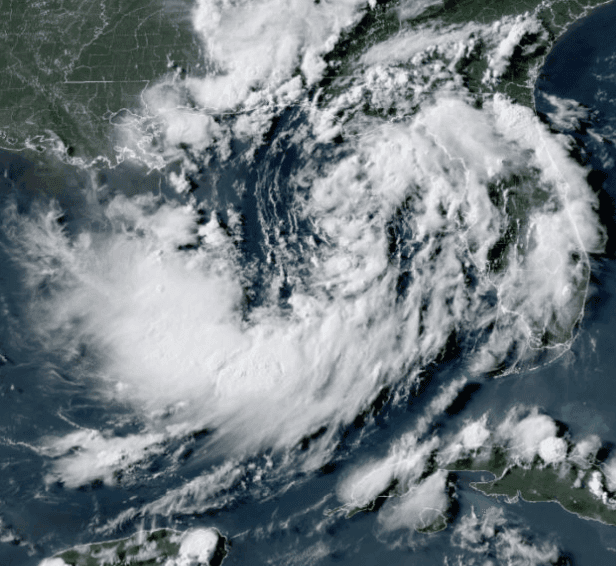

ระวังลิงก์ภายนอก
ระวังลิงก์ภายนอก
คำถามที่พบบ่อย