
Escalating U.S.-Iran tensions, including American strikes on Iranian oil tankers and Tehran’s retaliatory missile launches toward bases in Jordan, have dominated recent coverage and could sustain prominent placement on the New York Times front page through the week. A widening trade dispute with Canada, marked by reciprocal tariffs and new U.S. import restrictions, adds economic friction amid broader midterm positioning. Republicans’ first-ever midterm convention in Texas, headlined by President Trump, offers a high-profile political stage that overlaps with the 25th anniversary of the September 11 attacks and related document releases on post-attack air quality. Apple’s unveiling of a foldable iPhone model and sanctions by U.K., Canadian, and French allies on Israeli settlements provide additional cultural and international angles likely to influence story selection and prominence as the week concludes.
基于Polymarket数据的AI实验性摘要。这不是交易建议,也不影响该市场的结算方式。 · 更新于$14,550 交易量
Woman
49%
Japan
23%
Peace
53%
Blockade
52%
Star
58%
Microsoft
20%
Rigged
51%
Space
51%
Elon / Musk
14%
Putin
52%
$14,550 交易量
Woman
49%
Japan
23%
Peace
53%
Blockade
52%
Star
58%
Microsoft
20%
Rigged
51%
Space
51%
Elon / Musk
14%
Putin
52%
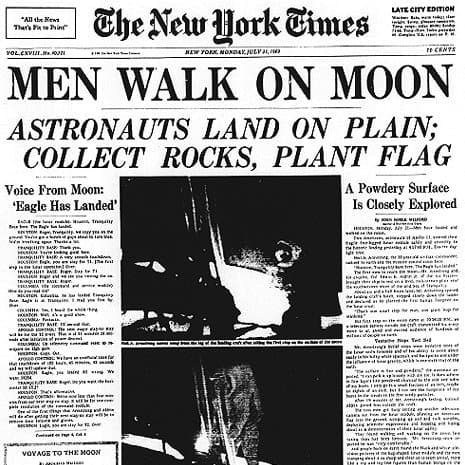
A headline is defined as the bolded or enlarged text directly preceding each article, previewing the article’s content and typically separated from the article’s text by a black line and byline. The primary headline for each story is the headline for that story with the largest text, typically appearing in bold font and above any other headlines or text for that article.
Sub-headlines, defined as additional bolded or enlarged text not separated from the primary headline by any text, will count, whether they appear before the byline or are partially surrounded by the article text but still adjacent to the primary headline. Pull quotes, however, or any bolded text not adjacent to the primary headline, will not count.
Banner headlines, defined as front-page headlines bordered on the sides only by white space, will count.
Image captions, article text, or any other text that does not constitute a headline, will not qualify.
Any plural or possessive forms of a listed term, as well as variations in capitalization, will count toward the resolution of this market, regardless of context. Other forms of the listed term will not count.
Misspellings or iterations of the listed term, including all slang forms, will not count toward a “Yes” resolution, regardless of context or intent.
If the listed term appears as part of a compound word, usage of that compound word qualifies, provided the listed term remains a distinct component of the compound. This does not include suffixes, prefixes, alternative tenses, or grammatical variations that alter the root word. (E.g. if the listed term is joy, killjoy qualifies but joyful does not. E.g. if the listed term is sun, sunflower qualifies but sunny does not.)
If the listed term is part of a hyphenated compound, use of that hyphenated compound will qualify. For example, if the listed term is “NATO,” “pro-NATO” and “anti-NATO” qualify.
If the listed term has non-standard transliterations into English, such transliterations will qualify if they are phonetically equivalent. For example, if the listed term is “Erdogan,” “Erdoğan” qualifies. If the listed term is “Zelensky,” “Zelenskiy” qualifies.
If the listed term is an abbreviation, periodized forms of that abbreviation will qualify. For example, if the listed term is “AI,” “A.I.” qualifies. However, extraneous symbols inserted into a word (e.g. r@d1cal for “radical”) will disqualify it from counting toward a “Yes” resolution.
This market only pertains to the daily New York edition prints of the New York Times, also available at https://nytimes.pressreader.com/the-new-york-times/. Only the first official release of a qualifying front page will be counted. Any subsequent releases that differ from the initial release will not be considered. Other editions will not be considered. You can find an example of what counts here: https://polymarket-upload.s3.us-east-2.amazonaws.com/nyt-headlines.jpeg.
市场开放时间: Sep 4, 2026, 5:34 PM ET
A headline is defined as the bolded or enlarged text directly preceding each article, previewing the article’s content and typically separated from the article’s text by a black line and byline. The primary headline for each story is the headline for that story with the largest text, typically appearing in bold font and above any other headlines or text for that article.
Sub-headlines, defined as additional bolded or enlarged text not separated from the primary headline by any text, will count, whether they appear before the byline or are partially surrounded by the article text but still adjacent to the primary headline. Pull quotes, however, or any bolded text not adjacent to the primary headline, will not count.
Banner headlines, defined as front-page headlines bordered on the sides only by white space, will count.
Image captions, article text, or any other text that does not constitute a headline, will not qualify.
Any plural or possessive forms of a listed term, as well as variations in capitalization, will count toward the resolution of this market, regardless of context. Other forms of the listed term will not count.
Misspellings or iterations of the listed term, including all slang forms, will not count toward a “Yes” resolution, regardless of context or intent.
If the listed term appears as part of a compound word, usage of that compound word qualifies, provided the listed term remains a distinct component of the compound. This does not include suffixes, prefixes, alternative tenses, or grammatical variations that alter the root word. (E.g. if the listed term is joy, killjoy qualifies but joyful does not. E.g. if the listed term is sun, sunflower qualifies but sunny does not.)
If the listed term is part of a hyphenated compound, use of that hyphenated compound will qualify. For example, if the listed term is “NATO,” “pro-NATO” and “anti-NATO” qualify.
If the listed term has non-standard transliterations into English, such transliterations will qualify if they are phonetically equivalent. For example, if the listed term is “Erdogan,” “Erdoğan” qualifies. If the listed term is “Zelensky,” “Zelenskiy” qualifies.
If the listed term is an abbreviation, periodized forms of that abbreviation will qualify. For example, if the listed term is “AI,” “A.I.” qualifies. However, extraneous symbols inserted into a word (e.g. r@d1cal for “radical”) will disqualify it from counting toward a “Yes” resolution.
This market only pertains to the daily New York edition prints of the New York Times, also available at https://nytimes.pressreader.com/the-new-york-times/. Only the first official release of a qualifying front page will be counted. Any subsequent releases that differ from the initial release will not be considered. Other editions will not be considered. You can find an example of what counts here: https://polymarket-upload.s3.us-east-2.amazonaws.com/nyt-headlines.jpeg.
Escalating U.S.-Iran tensions, including American strikes on Iranian oil tankers and Tehran’s retaliatory missile launches toward bases in Jordan, have dominated recent coverage and could sustain prominent placement on the New York Times front page through the week. A widening trade dispute with Canada, marked by reciprocal tariffs and new U.S. import restrictions, adds economic friction amid broader midterm positioning. Republicans’ first-ever midterm convention in Texas, headlined by President Trump, offers a high-profile political stage that overlaps with the 25th anniversary of the September 11 attacks and related document releases on post-attack air quality. Apple’s unveiling of a foldable iPhone model and sanctions by U.K., Canadian, and French allies on Israeli settlements provide additional cultural and international angles likely to influence story selection and prominence as the week concludes.
基于Polymarket数据的AI实验性摘要。这不是交易建议,也不影响该市场的结算方式。 · 更新于


警惕外部链接哦。
警惕外部链接哦。
常见问题