

Escalating U.S.-Iran naval clashes in the Strait of Hormuz, a chokepoint for roughly one-fifth of global oil and LNG trade, have pushed Brent crude above $101 per barrel and elevated war-risk insurance premiums to multi-year highs. Recent Iranian missile strikes on commercial vessels and expansion of maritime exclusion zones, alongside U.S. strikes on IRGC-linked tankers and enforcement of port blockades, have sharply reduced daily transits well below pre-2026 averages of 85–140 ships. These dynamics heighten uncertainty around multinational naval escorts or freedom-of-navigation operations by year-end, with potential catalysts including further FOMC rate decisions influenced by energy-driven inflation data and any de-escalation talks that could stabilize tanker flows and ease supply-chain volatility.
Polymarket ডেটা রেফারেন্স করে পরীক্ষামূলক AI-জেনারেটেড সারাংশ। এটি ট্রেডিং পরামর্শ নয় এবং এই মার্কেট কীভাবে রেজলভ হয় তাতে কোনো ভূমিকা রাখে না। · আপডেটেডWhich countries will send warships through the Strait of Hormuz by December 31?
Which countries will send warships through the Strait of Hormuz by December 31?
$45,107 Vol.

US
32%

Italy
18%

UK
12%

Australia
10%

Germany
9%

France
8%

Greece
11%

Netherlands
6%
$45,107 Vol.
US
32%
Italy
18%
UK
12%
Australia
10%
Germany
9%
France
8%
Greece
11%
Netherlands
6%
A "warship transit" is defined as a military vessel passing through the Strait of Hormuz. Military cargo or support vessels will be considered “warships”; however, commercial or civilian vessels will not qualify.
For the purposes of this market, only transits through the Strait of Hormuz will be considered, defined as passage through the narrowest portion of the waterway between Iran and Oman. Operations solely in the Persian Gulf, Gulf of Oman, or Arabian Sea without passage through this narrowest section will not qualify.
Official confirmation by a national government or its military that its vessels transited through the Strait of Hormuz during the specified timeframe will resolve this market immediately. An overwhelming consensus of credible reporting confirming that such a transit occurred during the specified timeframe will also suffice.
Qualifying confirmations must be made within this markets above specified timeframe and include official announcements that a country has deployed naval vessels to transit or escort shipping through the Strait of Hormuz.
Confirmations referring only to naval presence in the broader region, including the Persian Gulf, Gulf of Oman, or Arabian Sea, without confirmed transit through the Strait itself, as well as aerial operations, cyber operations, or actions by proxies or third parties, will not alone qualify.
The primary resolution source for this market will be official information by the respective national governments or their militaries; however, an overwhelming consensus of credible reporting will also suffice.
মার্কেট ওপেন হয়েছে: Aug 26, 2026, 6:17 PM ET
রেজলভার
0x65070BE91...A "warship transit" is defined as a military vessel passing through the Strait of Hormuz. Military cargo or support vessels will be considered “warships”; however, commercial or civilian vessels will not qualify.
For the purposes of this market, only transits through the Strait of Hormuz will be considered, defined as passage through the narrowest portion of the waterway between Iran and Oman. Operations solely in the Persian Gulf, Gulf of Oman, or Arabian Sea without passage through this narrowest section will not qualify.
Official confirmation by a national government or its military that its vessels transited through the Strait of Hormuz during the specified timeframe will resolve this market immediately. An overwhelming consensus of credible reporting confirming that such a transit occurred during the specified timeframe will also suffice.
Qualifying confirmations must be made within this markets above specified timeframe and include official announcements that a country has deployed naval vessels to transit or escort shipping through the Strait of Hormuz.
Confirmations referring only to naval presence in the broader region, including the Persian Gulf, Gulf of Oman, or Arabian Sea, without confirmed transit through the Strait itself, as well as aerial operations, cyber operations, or actions by proxies or third parties, will not alone qualify.
The primary resolution source for this market will be official information by the respective national governments or their militaries; however, an overwhelming consensus of credible reporting will also suffice.
রেজলভার
0x65070BE91...Escalating U.S.-Iran naval clashes in the Strait of Hormuz, a chokepoint for roughly one-fifth of global oil and LNG trade, have pushed Brent crude above $101 per barrel and elevated war-risk insurance premiums to multi-year highs. Recent Iranian missile strikes on commercial vessels and expansion of maritime exclusion zones, alongside U.S. strikes on IRGC-linked tankers and enforcement of port blockades, have sharply reduced daily transits well below pre-2026 averages of 85–140 ships. These dynamics heighten uncertainty around multinational naval escorts or freedom-of-navigation operations by year-end, with potential catalysts including further FOMC rate decisions influenced by energy-driven inflation data and any de-escalation talks that could stabilize tanker flows and ease supply-chain volatility.
Polymarket ডেটা রেফারেন্স করে পরীক্ষামূলক AI-জেনারেটেড সারাংশ। এটি ট্রেডিং পরামর্শ নয় এবং এই মার্কেট কীভাবে রেজলভ হয় তাতে কোনো ভূমিকা রাখে না। · আপডেটেড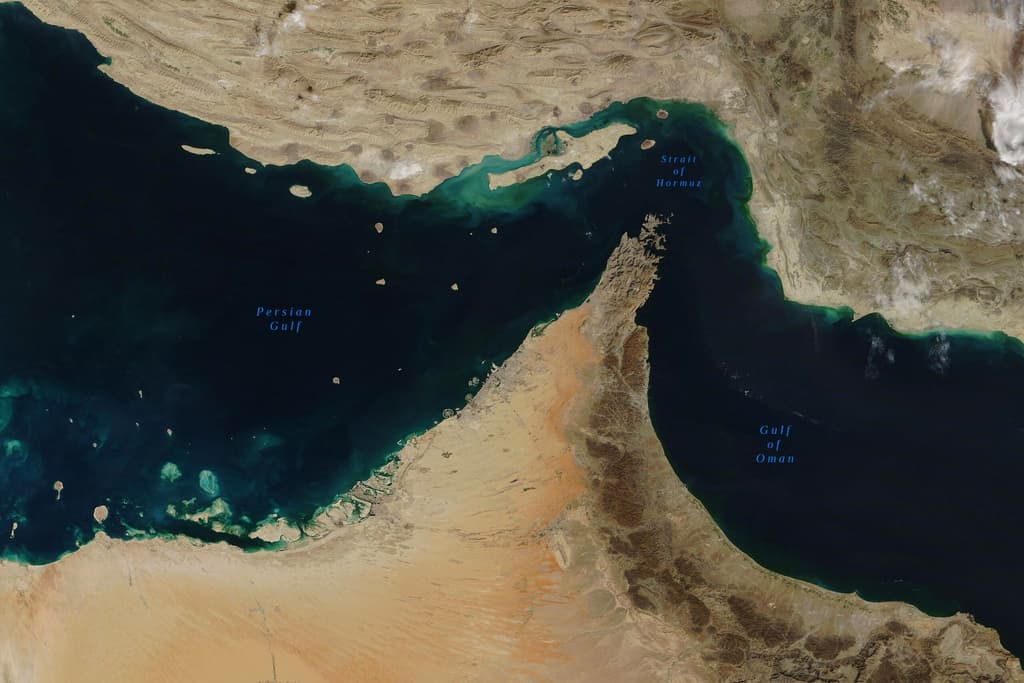

বাহ্যিক লিংক থেকে সাবধান।
বাহ্যিক লিংক থেকে সাবধান।
সচরাচর জিজ্ঞাসা